Podcast analytics are a great way for creators to understand what’s going on once they hit publish. It helps doubling down on what’s working, and adjusting your strategy and content until it starts hitting the right spots.
This guide breaks down the podcast analytics tools and metrics that actually matter. It also explains what changed in the analytics landscape over the past few years and how to combine podcast and website data to make smarter growth decisions.
For big-picture industry benchmarks, use this alongside our podcast statistics and trends guide. This article focuses on your show-level performance and how to improve it.
Why podcast analytics matter
Podcast growth is way beyond just publishing consistently. Discovery is fragmented across dozens of apps. (even though most listeners would come from Apple, Spotify or YouTube, the long tail gets quite long here with tons of different apps or even from your podcast website).
Strong podcast analytics help answer questions such as:
- Which episodes generate the most listening in the first 24 hours, or 7/30/60/90 days since publishing.
- Which platforms actually drive new audience growth
- Are you trending locally? Are new listeners coming from a specific country, region or city?
- Which channels bring visitors who become paid subscribers or members
When those answers are clear, planning gets easier. Episode formats improve faster, promotion timing becomes more intentional, and monetization decisions are based on evidence rather than assumptions.
Key metrics to look for in podcast analytic services
When used right, your podcast analytics data can be a great partner. It’d give you the cold truth on how your content performs, provide insights for how to plan future content, and give you an overview of who your audience is.
Downloads, plays, and unique listeners
Downloads are very useful and often serve as the baseline KPI in the industry. Especially for sponsor conversations and trend tracking. Unique listeners add context by reducing inflation from repeat plays over time.
Good podcast analytic tools would let you differentiate the two, but also filter out bots and unwanted traffic, so that the numbers are actually estimating the right number of people consuming your content.
Episode performance curve for 24 hours, 7-day, 30-day, and 90-day splits
Most episodes have a very strong day-one. Average episodes get over 2,000 listens in the first 12 hours (estimated based on our research and existing user base). The key difference between “one-offs” and a sustainable growth is what comes after the first day.
When the curve flattens out after a few days, you’re not likely to find much more listeners to that particular episode over time. However we often see episodes that keep growing. Sure, whatever follows the initial publishing day would usually look less significant, but growth that compounds over time is key for building a sustainable podcast.
Episodes with weaker day-one performance can still become long-tail winners if demand, search and internal linking are strong. That is why podcast SEO should be measured together with podcast analytics, and you should target having constant downloads to your backlog.
Platform and app distribution
Platform split explains where listening actually happens. Do people mainly come from Apple Podcasts, or are they subscribed via other apps like Castbox, Pocket Casts or Podcast Addict? How many listeners come from your website? Did you get featured in a new platform and suddenly get many listens from there?
This can always affect your promotion strategy and production priorities when researched properly.
Geography and device data
Location and device insights are often underused. They can improve ad targeting, sponsorship packaging, publishing timing, and even content examples used in episodes.
Device mix also influences product / sponsorshop choices. A mobile-heavy audience (which is often the case in podcasting) usually responds better to tighter intros and cleaner pacing, while desktop-heavy listening often correlates with workday consumption and longer sessions.
Why podcast analytics numbers do not always match
Podcasting has always been a little fragmented, even though it’s an open format. Some of your stats live in one dashboard, but some are locked into platforms like YouTube or Spotify. Getting visibility across all data is important to understand the big picture.
Data can be even different across podcast hosts. Some hosts support certain analytics standards and some rather create their own. Filtering out bots and unwanted traffic can also vary between providers.
Podcast analytics tools that matter in 2026
Good podcast analytics tools help podcasters determine trends, understand which episodes are bound for success, and which generate more hype. Getting the right context on the audience is interesting as well – where they are listening from geographically, which device or app they’re using etc.
1. Podcast hosting platform analytics
Podcast hosting platforms like Beamly often offers analytic dashboards that usually include downloads, listener trends, app distribution, location data, and more.
For creators comparing monetization options, host data is often where sponsor-ready reporting begins.
2. Apple Podcasts Connect
Apple Podcasts Connect provides performance data specific to Apple Podcasts listening. Use it to analyze Apple behavior patterns, retention by episode, and completion trends on that platform.
3. Spotify for Creators
Spotify for Creators is the current Spotify analytics and publishing environment, formerly known as Spotify for Podcasters. It provides Spotify-specific audience and engagement insights, including features tied to Spotify’s own ecosystem.
Spotify data should be reviewed as a platform lens, not as total show performance.
4. YouTube Studio and YouTube Music
YouTube has become a major podcast discovery channel. For creators publishing video podcasts, YouTube Studio is essential for t racking watch behavior, retention, click-through trends, and audience response.
If video workflow is part of the strategy, this guide pairs well with our walkthrough on how to import a YouTube channel to your website.
5. Prefix-based measurement services like Podtrac and OP3
A prefix is a small tracking redirect added to the front of each episode’s download URL inside your RSS feed. When someone downloads or streams an episode, the request passes through the measurement service first, which logs the download in a standardized way, then forwards the listener to the actual audio file. Because the prefix sits at the feed level, it captures activity across every app and directory, not just one platform’s dashboard.
That makes a prefix the closest thing to a neutral, cross-platform download count, which is exactly why advertisers and media buyers tend to trust it. The major providers in 2026 are:
- OP3 (Open Podcast Prefix Project): a free, open-source service focused on transparency and listener privacy. It publishes verifiable download stats without exposing listener data, which makes it a strong default for creators who want open, trustworthy metrics.
- Podtrac: one of the most established measurement services, with industry-standard download tracking that is widely recognized by advertisers and media buyers.
- Podscribe: attribution and conversion tracking built for advertisers, measuring performance beyond promo codes so a show gets credit for the conversions it actually drives.
- Spotify Ad Analytics (formerly Podsights): campaign measurement and attribution for podcast advertising, now part of Spotify’s ad stack.
- Podcorn: an advertising marketplace with its own analytics prefix for tracking show performance and optimizing sponsorship revenue.
Each provider keeps its own dashboard, so the prefix enables tracking while you view the data on their side. Stacking more than one prefix is common, and many creators now combine a prefix or two with their host analytics, native platform dashboards, and website analytics rather than leaning on a single tracker.
6. Directory and market tools
Platforms like ListenNotes and Podchaser are useful for category visibility, market context, and show-level discovery data. They are not full replacements for primary analytics dashboards, but they can help with positioning, competitor tracking, and sponsorship preparation.
For sponsorship revenue, package these signals with stronger performance proof from your own analytics. This complements the strategy in our guide on how to get podcast sponsors.
How Beamly combines website and podcast analytics
We know a thing or two about analytics. Having built a full analytics platform for both websites and for podcasts, and talking to dozens of users who use analytics every day – we managed to create a highly accurate and focused dashboard that can power your show. Our team came up with a few unique data points and charts that can only exist if you use a tool like Beamly that combines your website, your podcast, and subscriptions.
Analytics were designed and built to support both website data and podcast data, so you can leverage cross-channel insights. Beamly is the first tool that’s bringing website and podcast analytics into one combined dashboard. Furthermore, you can also get insights into your premium content – see how it performs and which audiences are consuming it (free members, paid subscribers, visitors etc.)
Podcast analytics built into Beamly
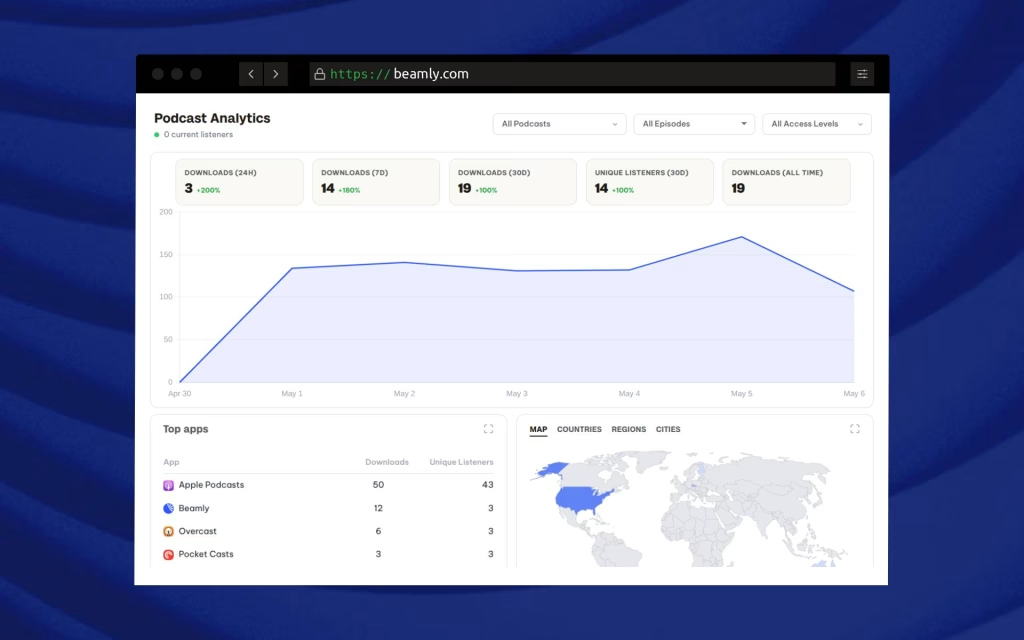
Beamly’s podcast analytics includes visibility into:
- Downloads across date ranges
- Unique listeners and current listeners
- Real-time listening activity
- Episode trends over time
- Top-performing podcasts and episodes
- Listening apps and platform distribution
- Device and operating system usage
- Geographic breakdowns (by country, region or city)
- Support for both audio and video
For networks or creators who run a few podcasts, the analytics data is combined with easy filtering by show or episode. It’s also possible to filter by access level (public or member-only) and that makes comparison faster and more reliable. Plays through your own website are tagged with the Beamly app.
Beamly also added one-click prefix support for third-party trackers so you can easily enable OP3, Podtrac, Podscribe, Spotify Ad Analytics, and Podcorn from the dashboard with a single checkbox each, and your feed updates automatically across every episode download URL. You can run several prefixes at once, which helps when an advertiser asks for a specific measurement partner.

FAQ – Podcast Analytics
What is the best free podcast analytics tool
There is no single best free tool for all use cases. Most creators start with host analytics like Beamly, plus platform dashboards such as Apple Podcasts Connect, Spotify for Creators, and YouTube Studio. For free, transparent download tracking, an open prefix like OP3 is a strong addition. Together these cover core listening behavior without adding paid tooling too early.
How can podcast analytics be tracked across Apple, Spotify, and YouTube
Use each native platform dashboard for platform-specific behavior, then combine that with host-level RSS analytics and website analytics. Cross-platform decisions become much clearer when episode performance and website conversion are reviewed together.
Which podcast metrics matter most for sponsorships
Sponsors usually care about reliable reach and audience fit. The strongest package includes consistent download trends, listener geography, platform mix, and evidence that listeners stay engaged. For premium sponsorship conversations, conversion proof from your website can become a major differentiator.
Conclusion
Creators that separate vanity metrics from actionable metrics make better content decisions, promote episodes more effectively, and monetize with more confidence.
If your current analytics setup still feels fragmented, Beamly can help bring the full picture together with built-in podcast analytics, built-in website analytics, member-segmented reporting, and publishing workflows that include automatic transcripts and show notes.
That combination gives creators one place to publish, measure, and improve without stitching together multiple tools every week.