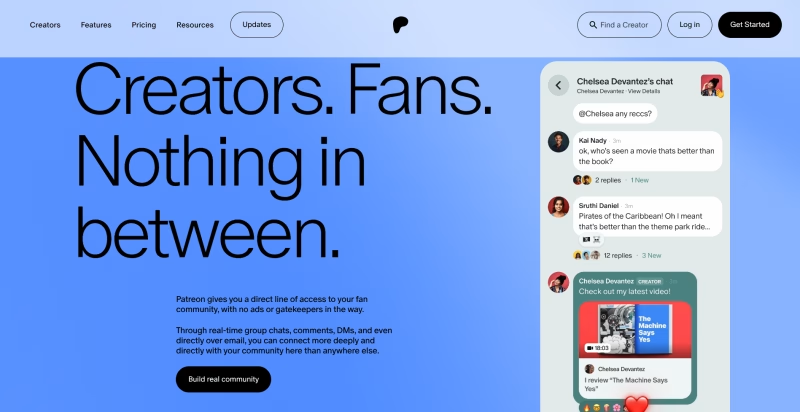
Creators often reach the same decision point after their memberships start growing – keep building on Patreon despite the high fees and lack of customizability, or look for Patreon alternatives with better margins and stronger ownership.
Each creator works differently, with different price points, business models, and content formats. When you monetize a membership or sell subscriptions, the right choice often starts with simple math. Before comparing Patreon alternatives, it helps to know what Patreon costs and what you get in return.
This guide compares Patreon alternatives by business model, fee structure, ownership, publishing tools, and member experience.
If you want to test your own tier prices and member count first, use the Patreon fee calculator.
Patreon alternatives at a glance
| Platform | Best for | Current platform fee | Main tradeoff |
|---|---|---|---|
| Beamly | Podcasters and multi-format creators who want an owned website | 0% Beamly platform fee; Stripe processing applies | Requires a paid Beamly plan |
| Patreon | Fast supporter memberships on a familiar platform | 10% on the standard plan; eligible legacy plans vary | Limited control over the full website and customer journey |
| Ghost | Writers, newsletters, and paid publications | 0%; Stripe processing applies | Podcast, video, and course features usually need other tools |
| Podia | Courses, downloads, coaching, and community | 5% on Mover; 0% on Shaker and Earthquaker; processing applies | Higher plans are needed to remove Podia’s fee |
| Ko-fi | Tips, commissions, memberships, and small shops | 0% on one-time tips with Ko-fi Free; 5% on memberships and most sales; processing applies | Less suitable for a full content website |
| Buy Me a Coffee | Simple tips and lightweight memberships | 5%; payment processing applies | Limited website, private feed, and content library depth |
| Memberful | Adding memberships to an existing website | $49 per month plus 4.9%; Stripe processing applies | Adds a membership layer rather than replacing the full website stack |
Fees above were checked against each platform’s published pricing in August 2026. Pricing changes, and payment processing is separate unless noted.
How Patreon fees actually work
Most fee confusion happens because creators focus on the platform percentage and ignore the rest of the pricing breakdown. Patreon costs can include the platform fee, payment processing, currency conversion, payout fees, and taxes – depending on your setup and billing address.
Patreon’s current standard plan charges a 10% platform fee on successfully processed payments for creator pages published after August 4, 2025. Continuously published older pages may remain on legacy platform fees of 5%, 8%, or 11%.
For a creator paid in USD on the standard plan, card, Apple Pay, US PayPal, and US Venmo processing is 2.9% + $0.30 per transaction. Non-US PayPal and Venmo payments are 3.9% + $0.30. A 2.5% currency conversion fee applies when the member pays in a currency different from the creator’s payout currency, and payout fees vary.
Eligible iOS in-app purchases use Apple’s fee instead of Patreon’s normal payment processing fee. The Patreon platform fee still applies. The calculator and fee guide covers current low-price examples, legacy-plan differences, iOS treatment, and official Patreon sources without repeating the full breakdown here.

When Patreon still makes sense
Patreon gets plenty of criticism for its fees, but there are good reasons it remains popular.
The biggest one is familiarity. Many supporters already have Patreon accounts and saved payment methods. For creators who want to test whether their audience will pay before investing in a broader website and membership setup, that lowers the barrier.
The tradeoffs become clearer as the membership grows. Patreon now supports custom domains on updated creator pages, but the site structure, checkout, and member journey still run through Patreon’s system. Percentage fees also grow with revenue. A creator paying $100 in platform fees at $1,000 in monthly revenue would pay $1,000 at $10,000, before processing.
Best Patreon alternatives by business model
The best option depends on what members are buying and how much of the customer relationship the creator needs to control.
Website-first membership platforms – Patreon alternatives for full ownership
This category is best for creators who want memberships on their own domain, stronger SEO control, and more flexibility across content formats.
Beamly is a website-first platform for podcasts, videos, blogs, courses, memberships, and digital products. Beamly charges 0% platform fees on memberships and products, with Stripe processing fees still applying. Payments and members live in the creator’s own Stripe account. For a focused feature comparison, read Patreon vs Beamly.
Podia bundles memberships, courses, digital downloads, coaching, and community. Its current Mover plan charges a 5% transaction fee, while Shaker and Earthquaker remove Podia’s transaction fee for a higher monthly price. Payment processor fees still apply. It fits creators who sell educational products and want them in one dashboard, though podcasters should compare private feed and podcast publishing needs carefully.
Ghost is a strong option for writers, journalists, and newsletter creators who want editorial control and clean paid subscriptions. It charges 0% transaction fees on subscriptions, with revenue coming from monthly platform pricing instead. Ghost is mainly built around text-first publishing, so creators who also need podcast hosting, video libraries, or courses usually need additional tools alongside it.
Lightweight tipping and community alternatives
This category suits creators who need quick tips, commissions, or a small supporter program more than a complete website.
Buy Me a Coffee charges a 5% platform fee with no monthly subscription. Payment processing and some payout or international charges apply separately. It supports one-time support, recurring memberships, and simple digital product sales. The quick checkout is useful, but the platform is limited for private feeds, deep content gating, and a full website experience.
Ko-fi is a good fit for tips, commissions, and small shops. Ko-fi Free charges 0% on one-time tips, while memberships, monthly tips, commissions, and shop sales carry a 5% service fee. PayPal or Stripe processing still applies. That fee model can be attractive for occasional support, but a creator building a paid content library may want a fuller website.
Membership layer alternatives for existing websites
Some creators already have a website and only need membership infrastructure layered on top.
Memberful integrates with WordPress, Discord, and other tools to handle subscriptions and access rules while the creator keeps an existing site and CMS. Its current Standard plan costs $49 per month plus a 4.9% transaction fee, with Stripe processing on top. It can be a sensible layer for an established website, but the combined cost deserves close attention.
Their pricing is a monthly fee plus a transaction percentage on each payment.
Which Patreon alternative fits your creator type
Patreon replacements mean different things for different types of content creators. Artists may care about commissions and storefronts. Writers may prioritize newsletters and archives. Podcasters need reliable private audio delivery.
Patreon alternatives for artists and illustrators
Artists usually need commission handling, a storefront for prints or digital files, and a clean way to accept tips from casual supporters.
Ko-fi is an easy fit for this workflow because it combines tips, commission requests, and simple shop tools. Buy Me a Coffee is another lightweight option when fast supporter payments matter more than deep content gating. Gumroad can work for digital products, but its current direct-sale fee is 10% + $0.50 before payment processing. Marketplace discovery sales carry a higher fee.
For artists who want to move beyond a profile page and build long-term visibility, a website-first platform is stronger. Beamly gives artists a branded site on their own domain, memberships, digital products, video, and searchable portfolio content in one place.
Patreon alternatives for writers and authors
Writers and authors should compare newsletter delivery, member-only archives, author pages, ebook sales, editing experience, and control over the subscriber list.
Ghost and Substack remain popular. Ghost charges no transaction fee, while Substack uses a percentage fee for paid subscriptions. Writers who also publish video, podcasts, courses, or digital products may prefer a broader platform such as Beamly.
Patreon alternatives for bands and musicians
Bands and musicians often need direct sales for releases, merchandise, tickets, and member perks. That is different from streaming and distribution services built around royalty collection.
Bandcamp is the most established music-specific alternative in this category. Its published revenue share is 15% on digital items and 10% on physical goods, with payment processing separate. It gives musicians a strong marketplace and direct sales tools, but less control over the wider website and content system.
For bands that want a full owned website with premium content, video, blog posts, and membership tiers in one place, Beamly is the stronger website-first path.
Patreon alternatives for podcasters
Podcasters need more than a place to post locked audio. A credible Patreon replacement should issue a unique private RSS feed to each member, revoke access when billing ends, support compatible podcast apps, and give listeners a website where they can browse the premium archive. Public episode pages, transcripts, and show notes should also live on the creator’s domain so search visibility grows around the show.
Beamly combines podcast hosting or public RSS import, private podcasts with per-member RSS delivery, a podcast website, and memberships with 0% Beamly platform fees. Payments live in the creator’s own Stripe account. Podcasters can gate bonus episodes, ad-free feeds, videos, posts, courses, and downloads without splitting the member experience across several tools.
A focused private feed service can also work for audio-only offers. The billing relationship and old private feeds cannot be treated as a simple content import.
How to choose an alternative without hurting retention
The platform decision affects members as much as it affects the creator. Compare these points before announcing a move:
- Margin predictability – Compare total cost at current and expected revenue, including processing, currency conversion, payout, and fixed software fees.
- Ownership and brand control – Check whether memberships run on your domain, whether audience data is exportable, and how much control you have over checkout and account management.
- Content flexibility – Confirm the platform can gate the formats you publish now and the ones members are likely to ask for next.
- Migration and onboarding quality – Test signup, login, billing, private feeds, and cancellation before inviting paying members. Confusing moves create avoidable churn.
- Room to expand – Check whether memberships can later sit beside one-time products, bundles, courses, sponsorship pages, or other revenue sources.
Why Beamly is a strong fit
Creators who outgrow Patreon usually want predictable membership costs, better margins, and a brand asset they own.
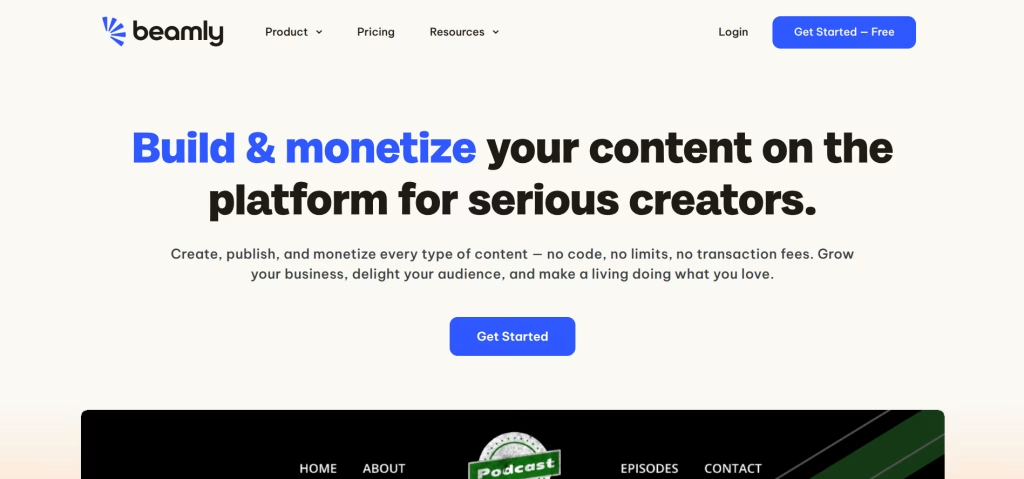
Beamly combines website building, publishing, and monetization so the membership becomes part of the podcast, blog, video library, course, or product catalog rather than a separate profile.
Key reasons creators choose Beamly:
- 0% Beamly platform fees on memberships and digital products. Stripe processing fees apply.
- A custom domain where public content can build search and brand authority.
- Publishing and paywalls across posts, pages, videos, podcasts, courses, and downloads.
- Unique private podcast feeds for paid members.
- Customer and billing data in the creator’s own Stripe account.
- Free migration help for eligible Beamly customers.
FAQ
Patreon’s standard plan charges a 10% platform fee, with payment processing and other applicable fees on top. Eligible legacy pages may have a 5%, 8%, or 11% platform fee. The Patreon fee calculator shows the common USD examples.
It can be, especially for creators who value quick setup and already have supporters used to Patreon. For creators prioritizing ownership, SEO, and margin control at scale, website-first alternatives are often a stronger long-term model.
Podcasters who want private feeds plus website and billing ownership usually benefit from a website-first platform. Beamly is built for that model, with public podcast hosting or RSS import, unique member feeds, Stripe billing, and 0% Beamly platform fees. Broader comparisons are covered in best membership tools for podcasters and best podcast monetization platforms.
For artists who mainly want tips and commissions, Ko-fi is often the easiest choice. Artists who want a branded website with portfolio content, digital product sales, video, and memberships may get more value from a website-first platform such as Beamly.
Conclusion
Patreon remains a good way to test supporter demand. As revenue and the content library grow, website ownership, portable billing, private feed quality, and total fees matter more.
For creators ready to run memberships on their own domain while keeping publishing and monetization in one system, Beamly is a strong fit. Use the membership website builder for multi-format creators, or the podcast membership platform when the offer is a show plus private RSS. Beamly charges 0% platform fees, with Stripe processing fees still applying. See Beamly pricing.