Starting a vlog is always awkward at first. Talking to a camera feels unnatural. The lighting looks weird. Every sentence comes out wrong. That’s completely normal!
What matters more than polish is consistency. Starting with a phone camera and basic microphone is fine – actually, it’s how most successful vloggers began (even Casey Neistat or Mr. Beast started with basic equipment). The expensive gear or serious production can always come later, if at all.
The vlog landscape nowadays is crowded but not impossible. Clear topics, engaging hooks, and regular uploads still work great. This guide covers what actually matters: basic gear that works, filming without overthinking it, editing efficiently, growing your brand, setting up a website, getting discovered on YouTube, and building an audience that cares. Let’s get to it!
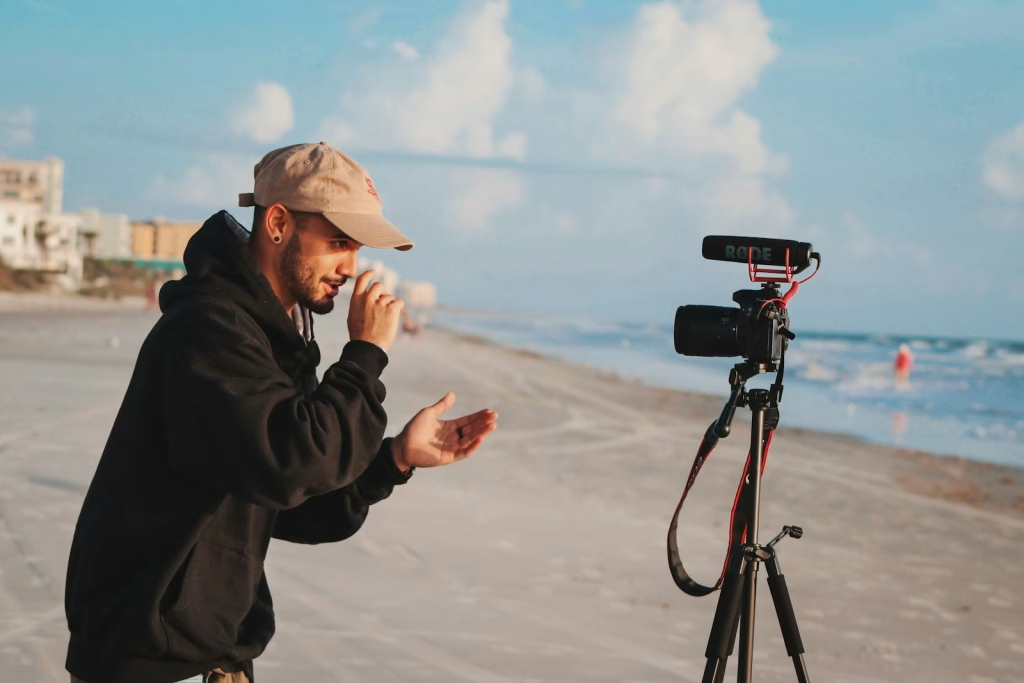
Understanding Vlogs
A vlog is video blogging – using a camera instead of a keyboard to share your perspective, teach something, or document experiences.
The format matters because video communicates differently than text. Personality comes through in ways that writing can’t match. Tone of voice, facial expressions, the setting behind you – these elements create connection beyond what words on a page can achieve.
People start vlogs for various reasons. Some just document their travels, day-to-day life or professional storyline. Others build personal brands and position themselves as authorities. Monetization becomes possible once an audience develops – through memberships, ads, sponsorships, affiliate links, or selling digital products.
The vlog spectrum is very wide. Lifestyle content, travel documentation, educational tutorials, product reviews, daily captures – the style matters less than consistency and authenticity (especially these days with AI videos taking over) .
Picking a Focus
Before choosing an actual topic to cover – remember that being successful with a vlog might take time. Don’t commit to a topic you might lose interest in, so try to really enjoy the process and be genuinely interested by it. The right niche sits where your knowledge, passion, and audience demand intersect.
Remember – focus wins. Trying to vlog about everything results in an audience that cares about nothing. (although, before you say “a show about nothing!” – we still recommend focusing on something).
Think of it as your channel’s identity, what can people expect when you release a new video? Be as consistent as possible, even if you occasionally post videos outside that core topic. Create some level of authority or credibility when you produce a lot of highly focused or niche content.
Popular niches include lifestyle vlogs, travel content, tech reviews, tutorials, fashion and beauty, fitness, food, gaming, business advice, educational content, and entertainment. The list goes on and on, but the principle stays the same – pick one core focus area and double down on it.
List your interests and expertise areas. Research whether successful vlogs already exist in those spaces. Existing competition signals existing demand – that’s good. The question becomes whether you can offer a fresh perspective or serve an underserved segment.
Competition exists in every niche. What makes channels stand out isn’t the topic alone – it’s personality, perspective, and presentation. There are thousands of tech review channels, but only one Marques Brownlee, and only one with your specific viewpoint and style.
Starting With Basic Gear
The equipment barrier is mostly psychological. Most people already own everything needed to start!
Camera Options
A smartphone shoots perfectly acceptable video. Modern phones handle 4K recording, stabilization, and decent low-light performance. The camera you have with you beats the expensive one sitting at home.
Upgrading makes sense once you’ve identified specific limitations. Point-and-shoot cameras offer better zoom and low-light performance. Mirrorless cameras provide full manual control and interchangeable lenses. Action cameras handle extreme conditions and unique angles.
But start with what you own. Upgrade only when you’ve hit actual limits, not imagined ones.
Audio Trumps Video
Poor audio kills watch time faster than mediocre video quality. Viewers forgive grainy footage. They won’t forgive unclear, muddy audio.
Built-in microphones rarely perform adequately. A basic lavalier (clip-on) mic costs $20-40 and transforms audio quality. Shotgun mics (like the popular Rode VideoMicro) mounted on cameras capture directional sound while reducing background noise. USB mics work well for sit-down formats or voiceover work.
The investment doesn’t need to be large. Even budget external mics outperform built-in options significantly.
When your audio quality is great, you can even repurpose your videos into podcasts.
Lighting Makes a Difference
Lighting transforms footage quality more than camera upgrades often do. Natural light near windows during daytime works beautifully and costs nothing.
For indoor or evening filming, a basic ring light provides even, flattering illumination. LED panels offer adjustable brightness and color temperature. Softboxes create professional-looking diffused light.
Start with natural light and add artificial sources only when needed.
Stability and Editing Tools
Shaky footage distracts viewers. A basic tripod handles stationary shots.
For editing, start with free options. CapCut, Veed, iMovie (Mac), handle basic editing well. Learn cutting, transitions, and music integration before investing in paid software like Adobe Premiere Pro or Final Cut Pro.
A Practical Starter Setup
For talking-head content: phone camera, basic lavalier mic ($20-40), small ring light, compact tripod. Total cost under $150.
For walk-and-talk videos: phone camera, phone gimbal ($50-100), shotgun mic with windscreen. Budget around $200 total.
For voiceover-heavy content: phone or webcam, USB microphone ($60-100), basic lighting.
These setups produce results comparable to much more expensive gear. Content quality matters more than production value at the beginning. Many vlogs have grown to tens of thousands of subscribers using phone cameras and budget mics. Expensive equipment doesn’t guarantee better content – it often becomes an excuse to avoid publishing.
Start with what’s available. Upgrade only when specific limitations become clear through actual creation.
Choosing Your Platform
YouTube dominates long-form video content for vloggers. The audience size (over 2 billion monthly users!), search discoverability through Google integration, monetization options, and algorithm-driven recommendations make it the natural primary platform.
Other platforms serve specific purposes. TikTok excels at reaching younger audiences with short content. Instagram works for community building and cross-promotion. Facebook still drives traffic for certain demographics and local audiences.
The practical strategy: establish YouTube as the main platform, then repurpose content for others. Long-form videos become multiple short clips for TikTok, Reels, and YouTube Shorts.
Repurposing Efficiently
Extract 2-4 highlights from each long-form video. Keep clips between 20-45 seconds. Focus each clip on one clear point or outcome – scrolling audiences won’t watch 5-minute explanations.
For vertical formats, frame faces in the upper third. Add captions with high contrast and readable sizing. Lead with the payoff, then provide quick context. End with a subtle invitation to find the full video.
The Case for Your Own Website or Platform
YouTube provides reach. A website provides ownership. That’s the key difference!
A vlog website serves as your internet home base. It showcases all videos in one organized place, collects email addresses for direct audience relationships, enables selling digital products or merchandise, offers exclusive member content, and removes platform restrictions on branding.
Beamly simplifies this by automatically syncing YouTube channels to your website while also supporting direct video hosting for exclusive content. This comes with plenty of video site templates, membership tools, digital sales, and audience building. It all happen from one platform without coding (and 0% platform fees beyond payment processing).
This gives vloggers the benefit of YouTube’s reach while maintaining control over their business and audience relationships.
Planning Content That Works
Consistency outperforms perfection. Success comes from showing up regularly with valuable content, not from flawless production!
Content Calendars Reduce Stress
Planning video topics ahead of time eliminates the daily “what should I film?” anxiety. Spend time monthly brainstorming ideas and creating a rough schedule.
The calendar doesn’t need rigidity – just a list of topics and a general posting rhythm (like Tuesdays and Fridays) provides enough structure.
Format Options
Successful vlogs typically follow recognizable structures: day-in-the-life documentation, how-to tutorials, voiceover-driven B-roll compilations, sit-down discussions, or challenge videos.
Using different formats keeps content fresh while maintaining consistent topics and personality.
Script Versus Spontaneity
Scripting decisions depend on content type and personal style.
Full scripts provide control and reduce editing but can feel stiff if delivery isn’t natural. Bullet-point outlines work better for many vloggers – providing structure without forcing word-for-word delivery.
Lifestyle content benefits from spontaneity. Educational content and reviews work better with prepared talking points that maintain focus.
Actually Filming
Camera shyness is universal among new vloggers. The awkwardness fades with repetition.
Overcoming On-Camera Discomfort
Early videos feel uncomfortable. Watching them back is worse (every vlogger has been there!). This improves with practice – typically around video ten, talking to the camera starts feeling normal.
Practical approaches: film alone initially, remember mistakes can be edited out, address the camera as if talking to a friend, prioritize authenticity over perfection, and start with shorter videos to reduce pressure.
The progression is predictable – painful at first, manageable by video five, natural by video ten.
Filming Fundamentals
Check framing – centered subjects with appropriate headroom. Mind the background – clean or interesting beats messy and distracting. Face light sources rather than backlighting yourself. Film landscape for long-form, vertical for Shorts and Reels. Record maximum quality – compression happens later. Shoot extra B-roll – editors always wish they had more supplementary footage.
Editing Efficiently
Basic editing skills produce good results. Advanced techniques can wait.
Remove unnecessary content – pauses, mistakes, tangents. Hook viewers in the first 5-10 seconds or lose them. Maintain appropriate pacing – neither rushed nor dragging. Add subtle background music. Use graphics sparingly to clarify key points.
Use consistent file naming conventions. Future organization depends on current discipline.
Getting Discovered
Content quality matters, but so does discoverability! You can create the best vlog in the world, but if nobody can find it, what’s the point?
YouTube SEO Essentials
Titles should combine keywords with specific outcomes. Make the title searchable, while promising a clear result. Specific titles outperform generic ones consistently.
Descriptions matter for the first three lines – restate the promise, include primary keywords, and explain what viewers learn. Add a summary, bullet takeaways, and timestamps once videos have chapters.
Tags or keywords help minimally now – use 5-10 keyword variations. Thumbnails should focus on one clear idea, include faces when relevant, use minimal text (under three words), and employ high contrast.
Key Metrics
Watch retention in the first 30 seconds – this shows hook effectiveness. Steep drops signal weak openings requiring rework.
Track click-through rates across thumbnail variations. Iterate clarity and contrast before experimenting with color.
Monitor top search terms driving traffic. Create follow-up content answering related queries.
Organize videos into thematic playlists. This improves navigation and encourages binge-watching, both valued by YouTube’s algorithm.
Building an Audience
Early growth is slow (unfortunately, there’s no magic bullet here). Consistent effort over months builds momentum.
Engage Comments
Responding to comments builds community and signals engagement to YouTube’s algorithm. Reply within the first 48 hours for maximum effect.
Encourage comments by asking questions in videos. Simple prompts like “What’s your experience with this?” can significantly boost comment activity.
Cross-Promote Strategically
Share videos across social platforms. Create platform-specific content – vertical teaser clips for Instagram and TikTok work better than direct YouTube links.
Adapt promotion to each platform’s culture and format.
Collaborations to Expand Reach
Partner with similarly-sized creators in your niche. Joint videos, challenges, or collaborative content expose both audiences to new creators.
Pitch collaboration ideas that benefit both parties equally.
Monetization Paths
Audience size opens several revenue streams.
Ad Revenue
YouTube Partner Program requirements vary by feature and region. As of today, typical thresholds include 1,000 subscribers plus either 4,000 watch hours (long-form) or 10 million Shorts views (short-form) over specified periods. CPMs range from a few dollars to $10+ per 1,000 views depending on niche and demographics.
Sponsorships
Brands pay creators to feature products or services. Sponsorships typically generate more revenue than ads. Even smaller channels with engaged niche audiences attract sponsors.
Reach out proactively to brands aligning with your content.
Digital Products
Create and sell expertise-based products – e-books, courses, presets, templates. This generates high profit margins since creators keep most revenue.
Memberships
Offer exclusive content to paying supporters. YouTube provides built-in membership features, but owning your membership through Beamly provides more control and better economics.
With Beamly, host exclusive videos that never appear on YouTube, offer behind-the-scenes content and early access, and keep more revenue without platform fees beyond payment processing. This builds independent audience relationships not dependent on YouTube’s algorithm.
Getting Started
Starting a vlog requires picking a focused niche, using available equipment, and filming consistently. Perfect production doesn’t matter initially – showing up regularly does!
So what are the essentials?
The essentials include choosing a sustainable niche, starting with basic gear and upgrading strategically, planning content while remaining flexible, editing for engagement rather than perfection, optimizing for YouTube discovery, maintaining consistent upload schedules, and engaging with your audience.
Early videos will be awkward. That’s universal (even MrBeast’s first videos were rough!). Improvement happens through repetition – video ten surpasses video one significantly. Progress requires persistence through the uncomfortable beginning phase.
When ready to expand beyond YouTube, establish your own platform. Beamly syncs YouTube channels automatically while supporting native video hosting for exclusive content. Offer memberships, sell digital products – all without platform fees beyond payment processing.