Are you looking to monetize your podcast? One of the first options that come to mind is of course, podcast advertising. While there are lots of different podcast monetization options, one that’s been around forever is traditional advertising. This can include host-read ads, sponsorships, short jingles, or externally recorded ad-spots you can drop into your episodes.
Fortunately, there are various ways to advertise on your podcast, even if you’re just starting out. You might prefer to join ad platforms, podcast networks, or use a marketplace. Meanwhile, more established creators can secure sponsorships for the entire podcast or select episodes by contacting brands directly.
In this post, we’ll cover how podcast advertising works, the latest trends (DAI/programmatic, AI targeting, video, and subscriptions), pricing benchmarks, and practical ways to get started. Let’s jump right in!
What Is Podcast Advertising? (And How It Works)
Lots of brands turn to podcasts to help them increase visibility and widen their audience. Lots of brands turn to podcasts to help them increase visibility and widen their audience. Globally, podcast ad spend is projected to reach about $4.46B in 2025 and approximately $5.53B by 2030. (source: Statista).
There are several forms of podcast advertisements, such as branded content and sponsorships. However, most people probably think of audio ads when they hear podcast advertising.
There are two types of audio ads: pre-recorded and host-read. For pre-recorded ads, brands provide 15-30-second commercial messages to insert into episodes. Host-read ads, on the other hand, are messages delivered by the podcaster and generally last at least a minute. These ads typically sound more organic and less like an advertisement since the host reads them.
It’s also important to know how these ads are placed. There are typically three ad spaces within a podcast: pre-roll, mid-roll, and post-roll:
- Pre-roll ads play at the start of an episode.
- Mid-roll ads are generally anywhere after the first 10 minutes of the episode.
- Post-roll ads play at the end of an episode.
The mid-roll space is the most coveted ad spot of the three. That’s because listeners are less likely to skip through an ad when the content is rolling. Most modern hosting platforms also support dynamic ad insertion (DAI), allowing you to place, swap, or geo/segment‑target ads across your catalog without re‑editing back episodes. Programmatic buying has also grown, letting advertisers automate placements while you control frequency caps, category blocks, and inventory rules.
The Benefits of Podcast Advertising
Advertising is one of the best ways to monetize your podcast. Since most podcasts are free to listen to, ads and sponsorships are great ways to keep the podcast afloat and earn revenue. In fact, podcast advertising can help you turn a passion project into a steady income. You can always combine ads with private podcasts to diversify your revenue streams.

Additionally, associating your podcast with popular brands can also boost your show’s reputation – especially when you choose sponsors that align with your brand values. When done strategically, advertisements can help you gain trust and reach new listeners.
How You’ll Get Paid for Podcast Advertising
Now, let’s discuss the most common ways to get paid for podcast advertising:
- For Impressions (CPM): Many brands use the cost-per-mille (CPM) advertising model. With CPM, advertisers pay a set price for 1,000 ads served. Several factors can determine CPM, including an ad’s spot and length. However, the average 30-second ad is generally worth around $18 per 1,000 listens.
- Based on Actions (CPA): Cost-per-action (CPA) is another popular model. In this scenario, advertisers only pay when listeners perform a specific action, like signing up for a free trial or making a purchase. Since CPA is based on specific actions, this model tends to be more cost-effective and makes it easier to track metrics.
- Fixed Rate: For the fixed rate method, advertisers pay a flat fee to advertise on a specific number of podcast episodes. Podcasters can potentially make more money using this method. However, tracking metrics with this model can be difficult.
Having an understanding of these different payment models will be useful as you start to navigate the world of podcast advertising. As a rule of thumb, mid‑rolls command higher CPMs than pre/post‑rolls, and host‑read ads often earn a premium (1.5–2.5×) over pre‑produced spots.
2025 Trends and What They Mean for Podcasters
- Dynamic Ad Insertion (DAI) and Programmatic: Automate placements, rotate creatives seasonally, and backfill un‑sold inventory without re‑editing files. Use brand‑safety controls, frequency caps, and category blocks to protect listener experience.
- AI‑Powered Targeting and Measurement: AI helps cluster audiences contextually (show topics, episode entities) and forecast performance, improving relevance without relying solely on personal data. Use UTMs, promo codes, and analytics to tie listens to outcomes. See: podcasting AI tools and podcast analytics services.
- Subscriptions and Ad‑Free Tiers: Many creators now offer ad‑free feeds, bonus episodes, or early access through memberships (Apple/Spotify) or on their own site. With Beamly memberships, you can offer ad‑free tiers with 0% platform fees (Stripe fees apply).
- Affiliate and Commerce Integrations: For niche shows, affiliates can outperform CPMs. Promote products you genuinely use, add transparent disclosures, and include trackable links in your show notes and on your website.
- Video Podcasting Monetization: Platforms like YouTube and Spotify are investing heavily in video podcasts, which opens inventory for pre/mid/post‑roll video and sponsorships, plus channel memberships and fan support. See: video podcasting tips.
How to Get Started with Podcast Advertising (5 Ways)
Now let’s take a look at five practical ways to start with podcast advertising.
1. Join a Podcast Network
Podcast networks provide various resources to increase visibility and market your podcast. By joining a podcast network, you can access marketing resources and connect with sponsors faster and easier than you would on your own.
Most podcast networks are open to everyone. Still, there are specific criteria for joining, such as content type and audience size. That means a network might deny your show if it’s brand new or very niche.
What’s more, networks charge a hefty cut for their services (typically around 30 percent). This can be a significant amount of money if you don’t have a huge audience.
Furthermore, you may lose control over various aspects of your show when you join a network. For example, they may ask you to switch to their hosting platform or end existing sponsorships that don’t align with their guidelines.
2. Use a Podcast Marketplace
You can also use a podcast advertising marketplace to find brands. With a marketplace like Podcorn, podcasters pitch their show and compete with other podcasts for advertising dollars:
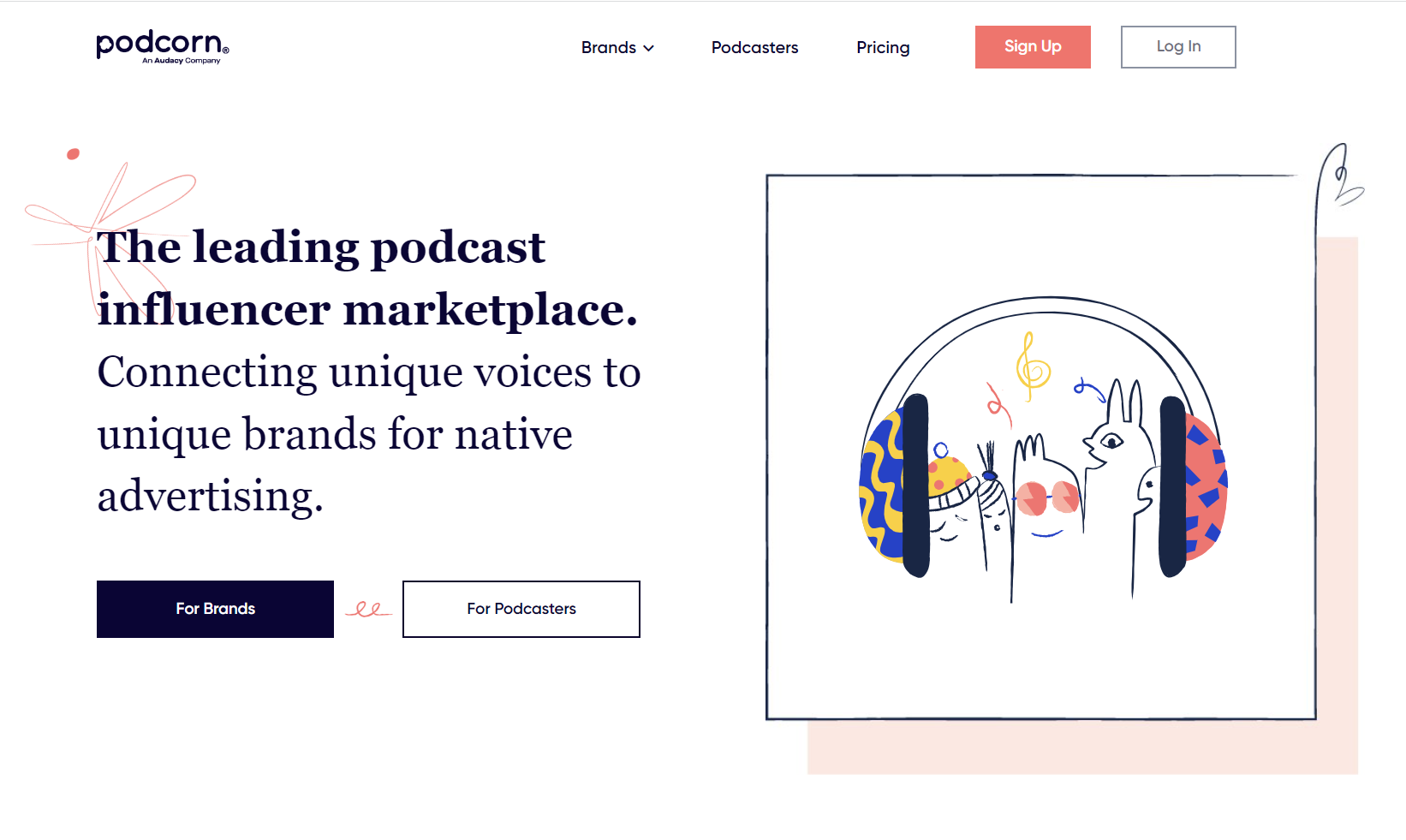
Podcast marketplaces save you time by simplifying the process of finding advertisers. As a result, you may be able to spend more time creating content for your show. Nevertheless, like podcast networks, marketplaces take a chunk of your profit. Some also offer programmatic buys you can opt into to fill remnant spots.
3. Work Directly with Brands
If you want to have complete control of your podcast, you can try working directly with brands. This method is ideal if you don’t want to split your ad revenue. Moreover, partnering with brands you love can help create an authentic experience for listeners.
But finding sponsorships, pitching your show, and negotiating revenue can be challenging. Therefore, you’ll want to have a comprehensive media kit and know your show’s worth to score sponsorships
What’s more, brands may not want to work with you if your podcast is too new or niche. For that reason, you may fare better on a network or marketplace if you’re just starting out.
4. Become an Affiliate
Affiliate marketing might be the right advertising strategy if you have a smaller audience. As an affiliate, you receive a unique link or code to share with your listeners. Then, you get paid when a conversion is made from that link.
Becoming an affiliate is one of the easiest ways to monetize your podcast. Therefore, this method is ideal for any podcaster. Moreover, it’s less intrusive and doesn’t require listens and downloads.
However, you’ll likely need a podcast website and blog to place your affiliate links. Plus, commissions are generally smaller with affiliate marketing, so choose products with true audience‑fit and negotiate tiered payouts.
5. Create a Podcast Website
Creating a dedicated podcast website opens more opportunities to monetize and measure. A website gives you credibility when negotiating sponsorships and lets you:
- Add a Sponsors/Partners page, media kit, and past campaigns.
- Place newsletter signups and membership upsells for ad‑free tiers.
- Include dynamic ad blocks (e.g., AdSense) and trackable affiliate links.
- Publish SEO‑friendly show notes and transcripts that rank and convert.
With Beamly, you can do all of the above in minutes – import episodes automatically, customize your audio player, add subscribe and social buttons, build a sponsor hub, and sell memberships with 0% platform fees.

Furthermore, you can include dynamic ad blocks on your site that display visual ads from providers like Google AdSense and similar. This isn’t really part of your podcast, but if you have a lot of traffic to the website – site monetization can nicely complement the ads you have on the show itself.
Conclusion
Podcast advertising provides one of the simplest ways to make money from your audio show. Better yet, it can be more effective than many formats thanks to host trust and attentive listening. You can even boost your show’s credibility through association with reputable brands.
To recap, here are five ways you can start podcast advertising:
- Join a podcast network.
- Use a podcast marketplace.
- Work directly with brands.
- Become an affiliate.
- Create a website.
Creating a podcast website comes with many monetization opportunities. To get started, use the Beamly website builder to design your pages, import episodes automatically, publish SEO‑ready show notes, add affiliate links, sell ad‑free memberships, and point to your social media sites. Get started today!