Podcasting is growing. The story in 2026 is more nuanced than “more podcasts every year” – There are millions of podcast feeds across the web, yet only a small fraction publish consistently – and video is reshaping how people discover and consume shows.
This guide collects the most useful podcast statistics for 2026. We’ll cover key questions like: how many podcasts exist (and why sources disagree), how many new shows and episodes are published each year, what the latest listener data says about audio vs video, and what all of this means if the goal is to grow a show and a business in 2026.
2026 Podcast statistics (highlights)
- Total podcasts: ~4.7 million (Podcast Index); ~3.7 million after filtering inactive feeds (ListenNotes)
- Active podcasts: ~342k published in the last 30 days; ~479k in the last 90 days
- New podcasts (launched in 2025): 198,000.
- Total episodes: ~190 million
- New episodes (published in 2025): ~26 million.
- Monthly U.S. listeners: 55% of Americans 12+
- Global listeners: ~584 million in 2025, projected to reach ~619 million in 2026
- Most-used platform: YouTube (33% of weekly U.S. podcast listeners)
Sources: Podcast Index, ListenNotes, The Infinite Dial 2025
Podcast growth: new shows and new episodes per year
The most revealing metric in podcasting is how much new content is being published. The number of new episodes per year is a strong evidence for overall production and consumption – even when the number of new shows fluctuates.
The number of new episodes per year nearly doubled in 2020 (from 18 million in 2019 to 31 million new episodes in 2020), but has remained quite stable since then: roughly 31 million in 2021, 28 million in 2022, 30 million in 2023, 28 million in 2024, and 26 million in 2025. (Source: ListenNotes)
Number of new podcasts per year
While the number of episodes has remained fairly stable, the number of actual new podcasts (shows) is more volatile.
To give a short recap of recent years’ podcast growth: there were around 203,000 new podcasts released in 2018 (according to ListenNotes). The following year, that figure jumped to nearly 336,000. The growth seemed quite significant back in 2019, but 2020 brought over 1,000,000 new podcasts – a record number and more than triple compared to the previous year.
So what drove the 2020 spike? Before Covid, podcast listening was heavily tied to commuting. According to Statista, most podcast listening in the U.S. happened in cars. When lockdowns hit in early 2020 and daily commutes vanished, podcast downloads initially dropped roughly 20% globally in the first few weeks, according to Podnews.
That dip reversed fast. Billions of people had more free time at home, and while traditional media production (television, film, live events) largely paused, podcasting thrived because creators could record remotely with minimal setup. New listeners discovered the medium, and existing listeners found new shows to fill the hours. The result was the largest single-year jump in podcast creation on record.
The pandemic also reshaped listening habits in ways that stuck. Home-based consumption grew, listening spread more evenly throughout the day rather than clustering around commute windows, and smart speakers became a more common playback device. Even after offices and commutes returned, those patterns have largely held.
The number of new shows In 2021 (~751,000) and 2022 (252,000) seemed to spiral downwards quite fast, but this trajectory has somewhat flattened in 2023 (236,000 new podcasts) and 2024 and 2025 (~198,000).
The growth trend for new podcasts seems to be moving downwards, but 2025 has brought a record number of shows that published at least one episode – 660,000 different podcasts can be proud of this collective achievement (in 2024 this number was about 227,000, almost a third of the volume in 2025).
According to Podcast Index, at least 479,000 shows have published in the last 90 days.
The future of podcasting: 2026 trends that shape the stats
Video is changing discovery (without killing audio)
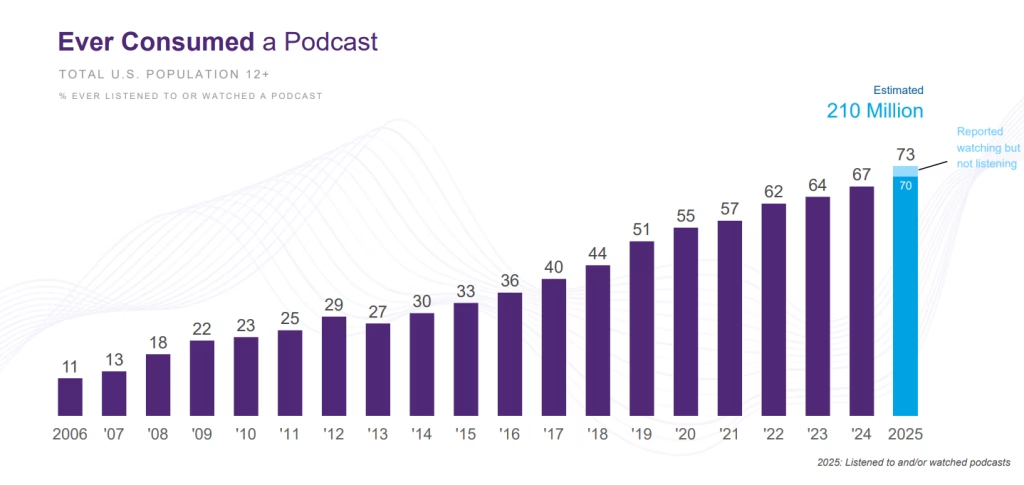
Video podcasts are no longer a niche. The latest Infinite Dial report data shows that 51% of Americans age 12+ have watched a podcast, and 73% have consumed a podcast in audio and/or video format. YouTube is also the most-used service for weekly podcast listening in the U.S.
It’s clear that video can expand reach and discovery, while audio keeps the “anywhere listening” advantage. Many successful shows now publish both, letting the audience decide how and where to consume it.
Late in 2025, Netflix and Spotify announced a partnership to bring select video podcasts to Netflix starting in early 2026. This signals that major platforms see video podcasting as a growth area – and that the line between “podcast” and “video content” continues to blur. (source: Axios)
Private podcasting and memberships skew public stats
Public charts and indexes can only track what is available publicly. Membership-only audio/video (paid feeds, private RSS, gated pages) is increasingly common, and those listens are often not reflected in publicly-visible datasets.
Private Podcasting is one reason why “industry-wide” numbers can underestimate how much podcasting is happening behind paywalls – especially for creators who sell premium feeds and bonus episodes.
According to our data and estimations here at Beamly, we assume that there could be 5-10% of additional premium/private podcasting, on top of all the public data. (source: Beamly)
Podcasting keeps professionalizing
Podcasting is still creator-friendly, but the average show is getting more polished. Brands are launching shows (including B2B podcasting), creators are building full content hubs (podcasts + YouTube + blogs), and more shows treat distribution, SEO, and monetization as part of the product.
2026 podcast statistics:
How many podcasts are there?
There is no single perfect number because different datasets use different definitions of what “counts” as a podcast. As said above, ListenNotes claims there are about 3.7 million podcasts out there, while PodcastIndex estimates over 4.4 million podcasts.
Why the numbers differ (and why it matters)
ListenNotes claims to filter out “dead” podcasts and feeds with no episodes or no audio content. The real number is hard to figure, but we can surely expect it to be somewhere between those numbers:
- Filtering and quality control: Some databases aggressively filter out empty feeds, spam, and low-quality content. ListenNotes explicitly calls out its focus on a high-quality dataset.
- What is being counted: Some platforms talk about “podcast titles in a catalog” (which can include shows not available as public RSS feeds), while indexes like Podcast Index and ListenNotes focus on RSS-based podcasts.
Amplifi and Podnews found a few years ago that 44% of podcasts have fewer than 3 episodes. They also reported that only 720k podcasts have more than 10 episodes, and out of those, only 156k release weekly.
How many active podcasts are there?
“Active” is a slippery metric – it depends on whether active means publishing this week, this quarter, or at least once per year. A practical way to look at activity is to use recent publishing windows from Podcast Index:
- Published in the last 30 days: 340,000 shows
- Published in the last 90 days: 479,000 shows
Those numbers are a helpful reality check: the industry may have millions of feeds, but the active publishing market is much smaller – and that is good news for new creators. The competition is real, but it is not 4.5 million active weekly shows. Consistency can take you far on your podcasting journey.
Where are podcasters coming from?
Most podcasters are coming from the US (around 2.3 million shows). Brazil, Indonesia, Germany and France close up the top 5. (source: ListenNotes)
What is the number one podcast in the world?
According to Spotify‘s statistics page, the current number 1 podcast in the world is (still…) “The Joe Rogan Experience“. This information should not surprise anyone, as Spotify decided to acquire the Joe Rogan Experience show for about $200 million back in 2020.
Joe Rogan’s podcast had one of the most popular YouTube channels at the time, and once acquired by Spotify it became exclusively available on Spotify (though in 2024 it returned to other platforms). It is important to note that Spotify does not share its full podcast listening stats, so it is a little hard to compare with other shows. Services like Podtrac or ListenNotes can sometimes provide more comprehensive stats and podcast rankings.
What languages are most podcasts in?
About 2.2 million podcasts are in English. Spanish (390,000), Portuguese (220,000), Indonesian (145,000) and German (111,000) close the top five spots. (Source: ListenNotes)
Podcast Listener Demographics
Listener stats matter most when they translate into strategy: what format to publish, where to distribute, and how to plan content and marketing.
How many people listen to podcasts in the U.S.?
According to Edison Research’s Infinite Dial 2025:
- 55% of Americans age 12+ are monthly podcast consumers
- 70% of Americans age 12+ have listened to a podcast
- 73% have consumed a podcast in audio and/or video format (estimated 210 million people)
How many people listen to podcasts worldwide?

Global numbers are typically estimates (and depend on how “podcast listener” is defined), but the trend line has been consistently upward. According to eMarketer, worldwide podcast listeners grew from around 507 million in 2023 to roughly 547 million in 2024, and an estimated 584 million in 2025. The projection for 2026 is about 619 million, growing to around 652 million by 2027.
Who listens to podcasts – and how does it split by gender?
Edison reports that monthly podcast listening is slightly higher among men (57%) than women (52%).
What age groups listen to podcasts?
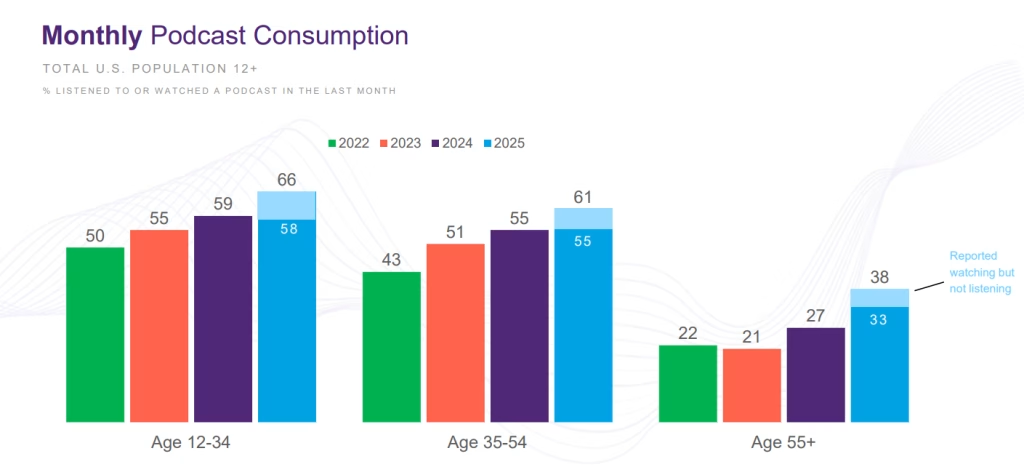
According to the Infinite Dial report, in 2025 there’s a larger share of podcast consumption with young populations:
- 66% of the people aged 12-34 have reported listening (or watching) at least one podcast in the past month.
- The next age group isn’t too far behind: 61% of people aged 35-54.
- As for people over 55 years old, the number drops significantly and currently sits at 38%
What is the most popular podcast platform?
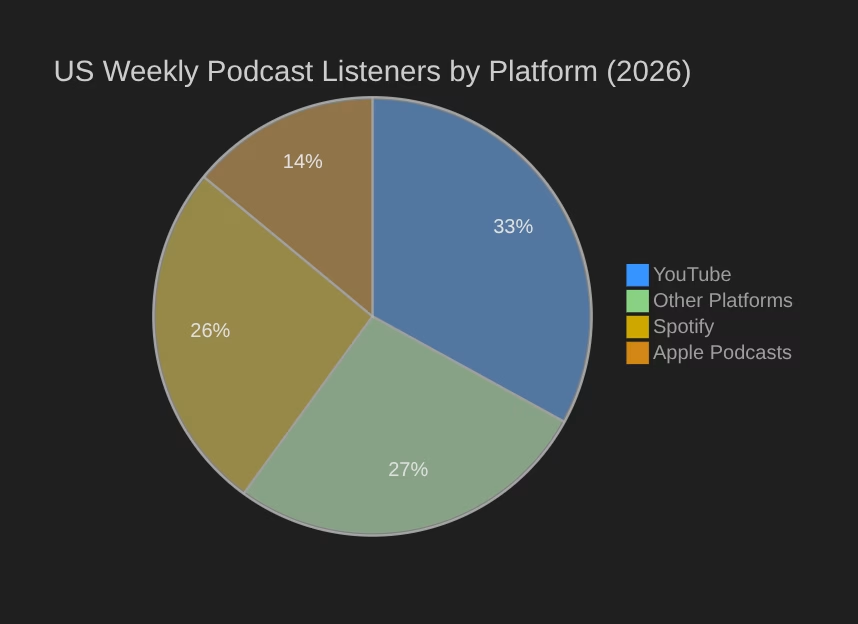
In the past, there was one clear leader in the world of podcast platforms – Apple Podcasts. Then came Spotify and claimed the throne. This has shifted quite a bit in recent years. According to Edison Research, YouTube now leads with about 33% of U.S. podcast listeners, followed by Spotify at 26%, and Apple Podcasts at 14%. The remaining 27% use other platforms.
Another interesting statistic: a meaningful share of podcast plays happen on the web – either on the podcast’s own website or via an embedded audio player. Building one’s podcast website is becoming more important than ever for serious podcasters.
Podcast listener behavior and engagement
Understanding how listeners consume podcasts – not just how many listen – is critical for content strategy.
How long do people listen to podcasts?
Podcast listeners spend an average of about 7 hours per week listening to podcasts. This makes podcasting one of the highest-engagement media formats.
Do podcast listeners listen to complete episodes?
Yes – podcast listeners are remarkably loyal. Over 70% of listeners complete most or all of a podcast episode. This is significantly higher than video completion rates on most platforms.
Additionally, about 46% of listeners tune in within 24 hours of a new episode release, which is why consistent publishing schedules matter.
When and where do people listen?
Podcasts fit into “secondary attention” moments – commutes, workouts, chores, and downtime. This is one reason audio podcasts remain popular even as video podcasts grow: audio works remarkably well at times when screens do not.
Podcast listener projections for 2026 and beyond
The long-term trend is clear: podcast consumption has been rising steadily over the past decade. Different sources use slightly different definitions and methodologies, so forecasts should be treated as directional.
According to Statista, the total number of podcast listeners in the U.S. market is projected to reach 254 million by 2027. Statista also estimated podcasting overall growth of about 48% between 2024 and 2029.
Also according to Statista, Podcasting as a whole is expected to grow between 2024 and 2029 by about 48 percent.
Podcast monetization and advertising statistics
According to Grand view research, the total podcasting market has surpassed $30 billion in 2024, and is projected to reach $131 billion by 2030.
How big is the podcast advertising market?
Global podcast advertising spend is projected to reach about $4.46 billion in 2025, with the U.S. contributing roughly $2.55 billion of that total.
The broader global podcast market (including subscriptions, premium content, and related services) is valued at approximately $38-40 billion in 2025, with continued growth expected through 2030.
(source: Statista)
Do podcast ads actually work?
Podcast advertising tends to outperform many other formats. About 46% of weekly podcast listeners have made a purchase after hearing a podcast ad – a conversion rate that explains why ad spend keeps growing.
For a deeper breakdown of monetization options (including when ads make sense vs. memberships or sponsorships), see: Podcast Advertising: Is It the Right Monetization Option for Your Show?
Other podcast industry trends
AI and transcripts are now a competitive advantage
AI has been one of the biggest technology trends in recent years, and podcasting is no exception. Many creators use AI to speed up editing, generate show notes, create clips, and publish transcripts.
There has also been a surge in AI tools for podcasters to improve workflows (editing, transcription, writing, and SEO).
Most popular podcast topics
According to a report by Pew Research on popular podcast topics in the U.S., True Crime leads with 24% of all listeners. It is followed by Politics/Government (10%), Entertainment (9%), Self-Help (8%), Sports (6%), History (4%), Money/Finance (2%), Comedy (2%), Religion (2%), Science & Tech (1%), and Health (1%).
This research also includes 32% as “mixed topics” or “other”. While the report is from 2023 (and the landscape evolves quickly), it still provides a helpful snapshot of listener interests.
Conclusion – Podcast Statistics & Trends
The podcasting industry is growing – both in active podcasts, number of episodes published, and listener engagement. It is not too late to start a podcast.
Listeners exist all over the world, and finding a niche that fits both the audience and the creator is still possible. It is important to pick a topic and genre that genuinely interests you, produce high quality content, and publish episodes regularly in order to grow a podcast.
One proven method for building credibility for a podcast is to create a full website for it. It helps establish a stronger brand and interact directly with listeners to grow the show. A podcast website helps with marketing, but also gives listeners an improved and unique experience. To build a full podcast website that is also automated and synced with your RSS feed, check out Beamly!
This article include data from Statista, Spotify, 2025 Infinite Dial Edison report, Nielsen-Podcasting Today, ListenNotes, and PodcastIndex. Other sources may be linked separately within the article.