Online courses are one of the best ways for creators to monetize their expertise. They scale, they build authority, and they can work alongside your existing content across podcasts, YouTube, blogs, or newsletters. There is consistent search demand for topics like creating, pricing, and selling courses – but demand is not the hard part. The challenge is turning your knowledge into a clear, valuable product that actually sells.
This guide walks through how to create an online course, price it with confidence, and sell it using a course sales page that converts visitors into students. It also shows how an online course platform like Beamly helps you create and sell online courses directly from your own website (on your own domain), alongside your podcast, videos, blog posts, and other digital products.
Why Online Courses Work Great for Creators
Before figuring out how to sell an online course, it helps to understand why courses still work when there are already so many options on the market.
Information is free everywhere. What students buy is a step-by-step path, accountability, and a clear outcome. That is exactly what a good course delivers. If there’s enough demand in your niche, and people are eager to learn from your expertise – you might be able to monetize it and really form a business around your content.
Creators need leverage
Trading hours for money through client work does not scale. A well designed course lets you help hundreds (or thousands) of people with the same core content while freeing your time for higher-value work. You can plan, produce, record and edit the course one time, and invest a lot of time into it – but if it’s genuinely helpful and well made – it can last for years.
Courses deepen your brand
A thoughtful course positions you as the person who can get students from “stuck” to “result”. That reputation feeds back into your podcast, YouTube channel, newsletter, and any other offers.
Courses bundle nicely with other products
You can package a course with digital downloads and products like templates, coaching calls, communities, audio feeds, or bonus content. Platforms like Beamly make it simple to sell these as digital products and course memberships from the same place.
If you treat your course as a serious product with clear positioning and a real transformation, it can become a central pillar of your creator business.
Creating (and Selling) Your Online Course
1) Validate Your Course Idea Before You Build
Many creators jump straight into recording videos and only later realize that the offer, audience, or promise is not quite right. A small validation loop up front can save weeks of work later on.
Start with a transformation and value, not a topic
Instead of describing your work as a “podcasting course” or “YouTube course”, define the transformation:
- “Launch a podcast that publishes weekly episodes for 90 days”
- “Go from zero to first 1,000 email subscribers in 60 days”
- “Plan, shoot, and edit a talking-head video in under 2 hours”
Here are a few good validation questions you can ask yourself:
- Who is this for, specifically?
- What painful situation are they in before your course?
- What does their “after” look like once they finish?
If you can describe the before and after in one sentence, marketing and pricing become much easier. Once you have a developed idea for the course, coming up with a good name for it is key. Feel free to use our online course name generator for that if you need help.
Use audience signals and search data
Look for proof that people want what you plan to teach. Use Google or SEO tools to determine how many searches for highly-relevant keywords or phrases are being used on a monthly basis. If you get a lot of similar questions via emails/DMs or being asked the same question on podcasts – try to form all those into one syllabus.
If you already have an established website with somewhat relevant content on it – try checking your analytics/stats and see if interest across those topics translates to visits to your site.
Lastly, you can always talk to your audience to validate the idea and gauge how much interest there is in your idea. Try asking 10-20 followers and take notes of their feedback.
You do not need every signal to be perfect, but you’d want enough proof that people are actively trying to solve this problem.
Pre-sell or test with a small offer
A great way to validate is to “sell” your course before you you even fully build it:
- Run a live workshop or a free “intro” lesson.
- Charge a modest price or grab emails of interested users in order to get access.
- Record everything and turn those sessions into the first draft of your course.
If nobody buys, you learned cheaply and cut your losses well in advance. If people buy and get results, you now have proof of demand, an early email-list and real students who can help you refine the material or provide feedback.
2) Design a Course That Actually Gets Results
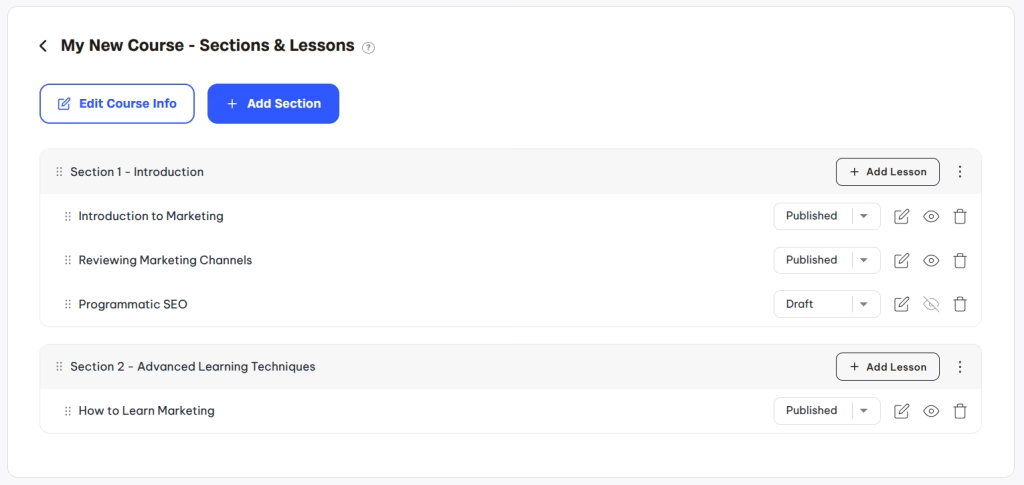
Once the idea is validated, the next step is designing the learning experience. Your students are not buying videos; they are buying an experience and a desired outcome/result.
Break the journey into clear sections (modules)
Think in terms of milestones rather than plain chapters:
- Section 1: Foundation and setup
- Section 2: First quick win
- Section 3: Core system or workflow
- Section 4: Implementation and troubleshooting
- Section 5: Optimization and scaling
You can structure the course however you see fit. Some people prefer to just have 1 module with all the core lessons listed on the same module, others prefer smaller chunks on a more detailed course outline.
It’s also great to offer bonus sections or updates to your course over time – this way students who already completed the course can come back for more.
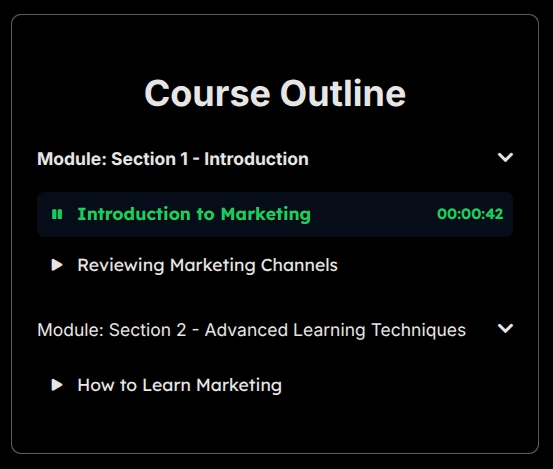
Keep lessons short and focused
Lesson length is less important than clarity, but attention spans are still real.
Short, focused lessons make it easier for students to binge progress and for you to improve pieces without re-recording the entire course.
Available lesson formats
You’re probably planning on doing a video-based course – that’s the most common and popular medium for online courses, but we also recommend to provide additional streams like an audio-only feed or full transcripts. You never know how your audience would prefer to consume your content!
A lot of course creators also tend to provide attached files on certain lessons. You can include quizzes, playbooks, templates and whatnot to improve the overall learning experience.
These elements dramatically improve completion rates and perceived value, which matters a lot when you think about how to price an online course later.
3) Choose the Right Stack to Build Online Courses
You can technically piece together your course stack from multiple tools, but complexity quickly becomes a burden for both you and your students. An all-in-one platform like Beamly can help you expand further by posting different courses alongside each other, publish a blog, create podcasts and video channels, or sell digital products or memberships.
What you actually need from an online course platform
- A place to host video, audio, or text lessons
- A clean, branded website where students can log in and access lessons
- Payment processing so you can sell your course
- A simple way to manage access, coupons, and bundles
As your business grows, you also benefit from:
- Support for multiple content types (podcasts, videos, blogs, courses)
- Memberships and recurring subscriptions
- Paywalls for specific posts, episodes, or lessons
- Analytics that show where students drop off
How Beamly fits into your course stack
Beamly is built for creators who publish across formats and want everything in one place. Instead of duct-taping a course platform to a separate podcast host and website builder, Beamly helps you:
- Host and organize online courses alongside podcasts, videos, and blog posts
- Build a fully branded website with customizable pages and navigation
- Create members-only areas and bundle courses with other digital products
- Charge for access with 0% transaction fees on Beamly’s side (Stripe processing fees still apply)
- Sync content from YouTube or your podcast to your Beamly site, then cross-promote it from course pages, bonuses, and member areas
This matters when you create and sell online courses because your course is rarely your only product. With Beamly, your course lives inside a broader ecosystem of content and offers, which increases customer lifetime value and keeps students inside your world instead of a marketplace.
Sell online courses from your own website (instead of a marketplace)
Marketplaces can be useful for discovery, but they usually come with tradeoffs: weaker branding, limited customer ownership, and less control over how you bundle products. Even worse – marketplaces would get a hefty chunk of your revenue (which can even go well over 60% on some platfroms)
If the goal is a long-term creator business and your own brand – selling online courses from your own website often makes much more sense because you can:
- Build your email list and customer relationship directly
- Control your pricing, bundles, and upsells without platform constraints
- Keep the full brand experience consistent across your course, content, and offers
Beamly is designed for this “creator hub” model. You can publish your course on your own domain, connect Stripe, and sell directly to students – while keeping your podcast, videos, and blog under the same roof.
4) How to Price an Online Course
Pricing is where many creators get stuck. Too low and students do not take it seriously. Too high and conversions could suffer. The goal is not to guess but to use a clear framework.
Anchor your price to the outcome, not the length
Students don’t care about buying X hours of video; Focus on offering real outcomes. They care about how much time or money they save, the additional income the course can help them generate, and how much frustration it removes.
Anchor your price to those outcomes by asking what the result would cost through 1:1 coaching or done-for-you services, and what a single successful application of the knowledge is worth to a student. If the outcome is booking the first three paid enterprise B2B SaaS clients, a premium price fits; if the outcome is setting up a simple Notion dashboard, a starter price is more realistic.
Use pricing tiers strategically
A simple tier structure works well:
- Core course – main curriculum only.
- Course + templates – curriculum plus assets, checklists, and tools.
- Content bundles – everything listed above plus any other premium content you publish like long-form blog posts, podcast episodes, or unrelated videos.
This lets budget-sensitive students join at a lower level while giving motivated students a way to invest more. It also increases average order value without feeling pushy.
Consider audience size and market
Other factors when thinking about how to price an online course:
- Audience size: Smaller audiences often need higher price points to make the math work.
- Market type: Courses that help people make or save money can sustain higher prices than purely hobby content.
- Brand maturity: If this is your first product, initial pricing may lean lower with the intention to raise as you gather testimonials and results.
Instead of endlessly debating, set a fair “starting price” with a clear plan to increase it after a specific number of enrollments or a launch window.
5) Build a Course Sales Page That Converts
You can build the best curriculum in your niche and still struggle to make sales if your course sales page does not communicate the value clearly. This page is where your content marketing, email list, and social traffic land right before buying.
Core sections of a high-converting course sales page
A solid structure looks like this:
- Hero section with clear promise
- Headline focused on transformation, not the course itself
- Sub-headline or description that adds specificity and timeline
- One primary call-to-action button (“Enroll now”, “Start today”)
- Who this is for (and who it is not for)
- Simple bullets describing current frustrations your ideal student feels
- A short “not for you if…” section filters out poor fits
- The story behind the course
- Short origin story that explains why this method works
- A short background about you (the creator/instructor) and why your experience and expertise is the right one
- With the above said, you should still try to focus on the student and their outcome rather than on yourself as the creator
- Curriculum breakdown
- List modules and lessons with short benefit-driven descriptions
- Highlight quick wins and where students get their first visible result
- Proof and trust
- Testimonials and student results if you have them
- Screenshots, before/after stories, or concrete metrics
- Pricing and guarantees
- Clear pricing tiers, payment plans, and what is included
- Simple guarantee or refund policy where appropriate
- FAQ
- Answer objections around time commitment, skill level, required tools, and support
- Final call-to-action
- Repeat the core promise and end with one clear next step
On Beamly, you can create custom product pages for your courses using a visual editor while keeping them integrated with your overall site structure. That means your sales page, podcast episodes, blog posts, and other offers all live under the same domain.
6) How to Sell an Online Course Consistently
A strong course and sales page set the foundation, but ongoing marketing is what drives predictable revenue. Many creators focus on the launch and then go quiet. Sustainable course businesses treat marketing as an ongoing system.
Combine search, content, and relationships
Channels that work particularly well:
- Search content
- Blog posts and YouTube videos that target popular phrases your audience might look for.
- Links back to the course page on your site from other authority figures in that industry.
- Publish a few free lessons with full descriptions and transcripts so Google can crawl those.
- Email list
- Lead magnet or mini-resource that solves part of the bigger problem.
- Nurture sequence that shares stories, quick wins, and case studies.
- Periodic campaigns focused on specific objections or new bonuses.
- Podcasts and video content
- Behind-the-scenes episodes about building the course.
- Public Q&A sessions.
- Partnerships and affiliates
- Collaborations with other creators who share a similar audience.
- Simple affiliate programs where partners receive a percentage of each sale.
- Flywheels
- Get your students alumni recommend the course to their own peers.
- Make it easier to share – When people are proud of what they’ve accomplished thanks to the course, or just appreciate the quality of the lessons – they’d more likely share it.
FAQ: Creating, Pricing, and Selling Online Courses
The best platform depends on your business model. If the priority is owning your audience and selling from your own website, look for an online course platform that includes a branded site, payments, and access controls – and ideally supports other content types too (blog, video, podcast) so everything works together.
Beamly is a strong option for creators who want an all-in-one hub: publish content, sell memberships, and sell online courses from the same domain and dashboard.
Start with the outcome, not the length. A practical pricing approach is to create tiers (core course, course + templates, course + coaching/community), then set an initial price you can stand behind and raise it after you collect testimonials and proven results.
No. A smaller, focused audience with the right problem can convert extremely well – especially if you validate the course with a workshop or pre-sell and build your sales page around one clear transformation.
Many course platforms are built for standalone courses and ignore the rest of a creator’s business. Beamly is different. It is designed for creators who publish across podcasts, video, blogs, and courses and want everything under one roof.
With Beamly you can:
– Create and sell online courses alongside podcasts, videos, and articles on one branded site
– Turn existing YouTube videos or podcast episodes into structured course modules and bonus lessons
– Build flexible memberships that bundle courses, private feeds, and exclusive content
– Put any post, lesson, or episode behind a paywall or member tier
– Accept payments with 0% platform transaction fees on Beamly’s side
– Own your audience data, email list, and branding instead of sending students to a generic marketplace
– For a creator who already publishes content, Beamly becomes the home base where everything connects: your course sales page, your free content, your premium lessons, and your community.
If you want to launch quickly, start a free trial and build your first course area and sales page in one place: Get started with Beamly.
Conclusion: Start Your Online Course
Most creators tend to overthink and risk of never launching their courses. They worry about course length, production quality, competition, and a dozen other things that do not actually determine whether a course sells.
What matters is much simpler: find a specific transformation your audience already wants, build a clear path to get them there, and price it based on the outcome rather than the hours involved. Everything else – the sales page copy, the email sequences, the platform choice – serves that core promise.
The most important thing here is the value and quality you provide to your students, but demand is also a deciding factor.
The creators who struggle usually skip the validation step. They build what they want to teach instead of what their audience needs to learn. The ones who succeed tend to start smaller than expected, often with a live workshop or cohort, and only formalize the curriculum after they see what actually helps people get results.
For creators who already have an audience through a podcast, YouTube channel, newsletter, or blog, the course fits naturally alongside your existing content. That is why platforms like Beamly are designed around this cross-format model: your course, your free content, your email list, and your community can all live in one place on a domain you own, instead of scattering across five different tools.
The best time to start building your first course was probably a couple of months ago. The second-best time is now. Pick a topic you have experience with, validate it quickly, and launch something imperfect that you can improve with real student feedback. The curriculum will get tighter over time, and the sales page will convert better after you collect a few testimonials. That is how sustainable course businesses are actually built.